
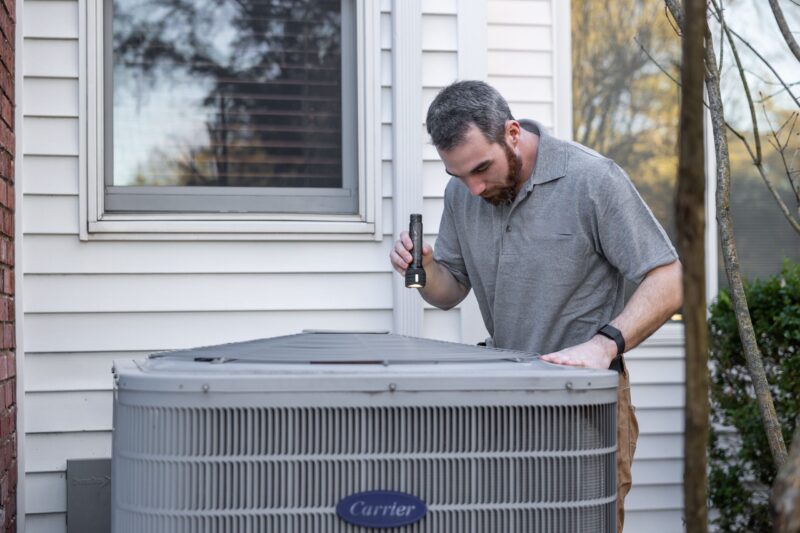
Choosing the right HVAC system for your Florida home means finding equipment that can handle long cooling seasons, humid days, and occasional cooler nights. The best fit depends on your home’s layout, insulation, ductwork, and comfort needs—not just the brand or advertised price. Understanding system types, sizing, efficiency, and installation costs can help you compare your options with confidence.
At Executive Cooling & Heating, we help Punta Gorda homeowners make informed decisions based on their homes and budgets. In this guide, we’ll explain how to choose the right HVAC system for your Florida home, including which features deserve attention and what to ask before approving an installation.
What Should You Consider When Choosing an HVAC System?
Choosing an HVAC system starts with understanding your home, how your household uses it, and what you want to improve. Equipment that works well in one Florida home may not suit another property with different construction or comfort needs. At Executive Cooling & Heating, we consider these details before recommending options for your Punta Gorda home.
Your Home’s Heating and Cooling Requirements
Your location, construction, insulation, windows, and floor plan all influence heating and cooling needs. A shaded home with well-sealed windows may have different requirements from a similarly sized property with large sun-exposed windows and significant air leakage. Existing equipment and ductwork also affect which systems can be installed and what supporting work may be necessary.
Florida homes have different climate demands, so equipment selection should reflect local conditions rather than statewide assumptions. Discuss how effectively your current system cools, whether the home feels damp, and how it performs during cooler weather. These priorities help guide a professional assessment of cooling capacity, moisture removal, and heating requirements.
Your Household’s Comfort Preferences
Think about what comfortable living means for your household. You may want steadier temperatures, quieter operation, easier scheduling, or better comfort in particular rooms. Make a list of concerns your current system has not resolved, including temperature swings, disruptive operating sounds, or bedrooms that remain warm at night.
Room usage matters, too. A home office occupied daily has different scheduling needs from a guest room used occasionally, while seasonal residents may value remote monitoring and controls. Sharing these patterns helps us evaluate equipment features and control options that serve a practical purpose in your home.
Your Installation Budget and Long-Term Plans
Set a budget for the complete installation, including equipment, labor, removal, and any necessary duct, electrical, or drainage work. A clear written estimate helps you understand the project’s scope and compare suitable options. Include ongoing maintenance and replacement supplies when evaluating affordability.
Also discuss planned renovations, additions, insulation improvements, and how long you expect to remain in the home. These plans can influence system requirements and which features are worth considering. We help you balance upfront cost with expected usage, operating expenses, and service needs so your choice fits both your current budget and future plans.
Compare HVAC System Types for Florida Homes
Several HVAC configurations can serve Florida homes, but the right choice depends on your property’s layout, existing infrastructure, and comfort needs. Understanding how each option distributes air and provides heating can help you compare recommendations. At Executive Cooling & Heating, we evaluate those requirements before helping you select a system.
Central Air Conditioning With a Separate Heating Source
A central air conditioner removes heat from indoor air and distributes cooled air through supply ducts. Return ducts carry air back to the equipment for continued circulation. This arrangement can serve an entire home when the equipment and ductwork are properly designed and installed.
The air conditioner itself does not provide heating. A compatible heating source, such as electric resistance heat installed in an air handler or a furnace paired with the cooling system, supplies warmth when needed. When evaluating this option, consider your existing ducts, heating requirements, available energy sources, and the condition of related equipment.
Ducted Air-Source Heat Pumps
A ducted air-source heat pump provides both cooling and heating by transferring heat between your home and the outdoors. In cooling mode, it removes heat from the indoor space; in heating mode, it reverses the process to bring heat indoors. Conditioned air travels through ductwork to the rooms the system serves.
Suitability depends on your home’s heating and cooling loads, local conditions, and installation requirements. Existing ducts may be reusable after evaluation, but electrical connections, controls, refrigerant lines, or backup heating arrangements may need changes. We assess the complete setup rather than assuming a heat pump can simply replace existing equipment without modifications.
Ductless Mini-Split Systems
Ductless mini-splits connect an outdoor unit to indoor units that condition specific spaces without traditional air-distribution ducts. A single-zone system serves one area, while a multizone configuration connects multiple indoor units to a compatible outdoor unit. Many ductless mini-splits are heat pumps, providing heating and cooling rather than cooling alone.
These systems may suit additions, homes without ductwork, or rooms with distinct comfort needs. They can also serve multiple areas when the configuration is designed appropriately. Indoor unit placement, room layout, capacity, drainage, and electrical requirements all deserve attention, especially when planning coverage across separate rooms.
Packaged HVAC Systems
A packaged HVAC system houses major heating and cooling components in one outdoor cabinet. Depending on the configuration, it may combine cooling with electric resistance heating, use heat pump technology, or pair cooling with gas heating. Duct connections carry air between the cabinet and the home.
This arrangement may be appropriate where the existing design uses packaged equipment or indoor equipment space is limited. Selection requires evaluating the mounting location, duct connections, electrical supply, drainage, and access for maintenance. Outdoor placement also needs to account for manufacturer clearances and site conditions.
| System Type | Duct Requirements | Heating Capability | Space Served | Key Installation Considerations |
| Central AC with separate heating | Requires suitable ductwork | Heating supplied by compatible separate equipment | Typically whole-home | Duct condition, matched components, heating source, and electrical or fuel connections |
| Ducted air-source heat pump | Requires suitable ductwork | Provides heating and cooling; backup heat may be included | Typically whole-home | Load requirements, duct capacity, controls, electrical supply, and backup heat configuration |
| Ductless mini-split | No traditional ducts for ductless indoor units | Heat pump models heat and cool; cooling-only models also exist | One area or multiple zones | Indoor unit placement, room coverage, refrigerant piping, drainage, and electrical supply |
| Packaged HVAC system | Usually requires ducts connecting the outdoor cabinet to the home | Depends on the selected configuration | Typically whole-home | Outdoor space, mounting, duct connections, service access, and utility connections |
Determine the Right HVAC Size for Your Home
Proper sizing helps your HVAC system maintain comfortable temperatures and manage moisture without unnecessary capacity. The right choice depends on how much heating and cooling your home requires, along with the equipment’s operating characteristics. At Executive Cooling & Heating, we assess those needs rather than recommending capacity based only on your home’s size or existing unit.
Why Square Footage Alone Is Not Enough
HVAC “size” generally refers to heating or cooling capacity, rather than the cabinet’s physical dimensions. Capacity is commonly expressed in British thermal units per hour, or BTU/h. Cooling capacity is also described in tons, with one ton equal to 12,000 BTU/h of heat removal.
Two homes with the same square footage can require different capacities because of their insulation, windows, air leakage, and sun exposure. Ceiling height and floor plan also affect the assessment. A universal square-footage-to-tonnage rule can overlook these differences, making it an unreliable basis for selecting equipment.
What a Professional Load Calculation Includes
A Manual J load calculation is a recognized method for estimating a home’s heating and cooling requirements. It considers insulation, window characteristics, building orientation, air leakage, occupancy, and local outdoor design conditions. Cooling calculations account for both temperature reduction and moisture-related loads.
Renovations can change those requirements. New windows, improved insulation, an addition, or changes to the conditioned space may make the previous equipment capacity unsuitable. Discuss completed and planned improvements before selecting a replacement so the assessment reflects the home you intend to condition.
Problems With Oversized and Undersized Equipment
Oversized equipment may reach the thermostat setting quickly and cycle off before providing adequate moisture removal, particularly when its capacity cannot adjust sufficiently. Frequent starts and stops can also affect temperature consistency. Undersized equipment may lack the capacity to maintain the desired indoor temperature during demanding weather, although long operating cycles alone do not establish that a system is too small.
Replacing an old unit with the same nominal capacity is not automatically the right approach. The original sizing may have been inaccurate, or the home’s requirements may have changed. Equipment selection should follow the load assessment and account for the system’s actual performance, while ductwork must support the required airflow to distribute conditioned air effectively.
Prioritize Humidity Control Alongside Cooling
A comfortable Florida home needs more than a lower temperature. Your HVAC system also needs to manage moisture under the conditions it serves. At Executive Cooling & Heating, we consider humidity concerns alongside equipment sizing, airflow, and your home’s characteristics when helping you compare systems.
Why Reaching the Thermostat Setting May Not Resolve Dampness
Temperature reduction and moisture removal are related processes, but they do not always happen at the same rate. Your air conditioner removes moisture when water vapor condenses on its cold evaporator coil and drains away. If the thermostat is satisfied before enough moisture is removed, the home may feel cool but damp.
Cooking, showers, laundry, and outdoor air entering through leaks or openings can add moisture. Plumbing leaks, water intrusion, and equipment problems may also contribute. Persistent humidity deserves an investigation of these conditions rather than assuming a lower thermostat setting or larger air conditioner will solve it.
Single-Stage, Two-Stage, and Variable-Capacity Systems
A single-stage system generally delivers one cooling output level when operating. A two-stage system offers lower and higher output levels, while variable-capacity equipment can adjust output across a broader operating range. Properly selected and configured equipment that adjusts capacity may run longer at reduced output, supporting steadier temperatures and moisture removal under suitable conditions.
Compressor capacity and blower speed are different features. The compressor influences cooling output, while the indoor blower moves air through the equipment and ducts. A variable-speed blower does not automatically mean the system has a variable-capacity compressor. We explain the proposed combination and its controls so you can assess potential benefits without assuming any feature guarantees humidity control.
When Additional Dehumidification May Be Appropriate
Before considering additional dehumidification, evaluate equipment operation, airflow, drainage, control settings, and building moisture sources. Correcting a malfunction or reducing unwanted outdoor air leakage may address part of the problem. Humidity measurements over time can help show whether moisture remains excessive after those issues are resolved.
Additional dehumidification may be appropriate when moisture remains a concern, particularly during mild weather when the home needs little cooling. A suitable dehumidifier can remove moisture without relying solely on cooling demand, but it requires proper selection, installation, and maintenance. It does not repair leaks, stop water intrusion, or replace the drying and repair of wet materials.
Understand HVAC Efficiency Ratings
Efficiency ratings help you compare how HVAC systems use electricity under standardized testing conditions. They provide useful guidance, but they should be considered alongside system sizing, installation quality, comfort features, and cost. At Executive Cooling & Heating, we help you understand the ratings attached to suitable equipment options for your Florida home.
What SEER2 Tells You About Cooling Efficiency
SEER2, or Seasonal Energy Efficiency Ratio 2, measures cooling output relative to electricity consumption across a standardized cooling season. A higher SEER2 rating indicates greater rated seasonal cooling efficiency. Compare ratings for the complete equipment configuration being proposed, since different indoor and outdoor component combinations can have different ratings.
SEER2 does not predict your exact electricity bill. Actual energy use depends on outdoor conditions, thermostat settings, insulation, ductwork, installation, and maintenance. It is a comparison tool rather than a guarantee of household savings.
How EER2 and HSPF2 Add Context
EER2, or Energy Efficiency Ratio 2, measures cooling efficiency at specified operating conditions rather than across an entire season. It adds context when comparing equipment performance at that test point, but it does not describe efficiency under every temperature or operating condition.
HSPF2, or Heating Seasonal Performance Factor 2, measures a heat pump’s heating output relative to electricity consumption over a standardized heating season. For a heat pump, review both heating and cooling ratings. For a central air conditioner paired with a separate heating source, HSPF2 does not apply to the air conditioner itself.
Balance Higher Efficiency With Installed Cost
Higher-efficiency equipment may carry a higher purchase price, so compare the complete installed cost with your expected usage and comfort priorities. Electricity rates, maintenance needs, and how long you expect to keep the system also influence the value of the investment. Ask for estimates with clearly stated assumptions rather than relying on a fixed savings percentage.
Where applicable, ENERGY STAR certification identifies equipment that meets the program’s efficiency criteria. Certification can help narrow your choices, but proper sizing and installation remain essential. We explain the cost and feature differences between suitable systems so you can choose an option that fits your home and budget without assuming a guaranteed payback period.
Evaluate Ductwork, Insulation, and Existing Infrastructure
Your HVAC system relies on more than the indoor and outdoor equipment to deliver comfortable temperatures. Ductwork, the building’s insulation and air sealing, electrical connections, and drainage all influence installation requirements and performance. At Executive Cooling & Heating, we consider these conditions when evaluating equipment options for your Florida home.
Check Duct Size, Leakage, and Airflow
Existing ductwork should be evaluated to determine whether it can support the airflow required by the proposed system. Disconnected joints, crushed sections, undersized ducts, and limited return-air pathways can interfere with air distribution. Leaks may allow conditioned air to escape or permit air exchange with surrounding spaces, depending on their location and pressure conditions.
Installing new equipment without addressing these problems may leave bedrooms warm or other rooms receiving insufficient airflow. We assess accessible duct conditions and relevant airflow measurements to determine whether repairs or modifications are needed. Those findings help define the complete installation scope before you choose a system.
Consider Insulation, Windows, and Air Sealing
Insulation, window characteristics, and air leakage affect how much heat enters or leaves your home. An attic with insufficient insulation or a room with large sun-exposed windows may have different cooling requirements from other areas. These conditions can contribute to discomfort even when the HVAC equipment operates normally.
Discuss planned insulation improvements, window replacements, and air-sealing work before finalizing equipment selection. Such improvements can change the home’s heating and cooling loads, making an updated assessment important. Coordinating building improvements with system sizing helps avoid selecting capacity based on conditions you intend to change.
Review Electrical Capacity, Drainage, and Installation Space
Replacement equipment may have different electrical requirements from your current system. The installation assessment should identify whether circuits, wiring, disconnects, or other electrical components need modifications. Condensate drainage also requires attention, including drain routing, condition, and any necessary overflow protection.
Equipment placement must provide manufacturer-required clearances, suitable airflow, and access for maintenance or repairs. Existing refrigerant lines and connections should also be assessed for compatibility, size, condition, and manufacturer requirements. Reusing these components is appropriate only when they meet the needs of the new installation, so any necessary changes should be included in the proposal.
Choose Controls and Air Quality Features That Serve Your Needs
Controls and air quality features should make your HVAC system easier to use and address specific household concerns. The right combination depends on your equipment, room usage, and indoor conditions. At Executive Cooling & Heating, we help you evaluate compatibility and practical benefits before adding features to your installation.
Thermostat Compatibility and Useful Scheduling Features
A basic thermostat provides straightforward temperature adjustment, while a programmable model lets you schedule settings around household routines. Smart thermostats may add app access, alerts, and other connected features. Communicating controls exchange detailed information with compatible equipment and may be required to access certain advanced system functions.
Confirm that the proposed control supports your equipment’s heating stages, cooling capacity adjustments, and available humidity functions. A thermostat that operates the system may not support every feature it offers. For seasonal residents, remote access and alerts can help monitor conditions while away, but connected functions depend on power, internet access, and the product’s capabilities.
When Zoning May Help
Zoning provides separate temperature control for different areas of a home. It may be useful when floors, sun-exposed rooms, or spaces with different usage patterns have distinct comfort needs. Before recommending zoning, the system design should account for each area’s heating and cooling requirements.
Ducted zoning typically uses controlled dampers to direct airflow through one shared system. Ductless zones use separate indoor units serving designated spaces, although units connected to a shared outdoor system may have operating limitations. Both approaches require appropriate capacity, airflow, and controls; simply adding thermostats or dampers does not guarantee balanced comfort.
Filtration, Ventilation, and Air Treatment Options
Choose filtration that fits correctly and provides suitable particle capture without exceeding the system’s airflow capabilities. Filter efficiency, dimensions, design, and replacement needs all matter. A more restrictive filter may require changes to the filter arrangement rather than a simple swap.
Ventilation and air treatment options should address identified concerns, such as cooking emissions, airborne particles, or specific equipment-surface conditions. Consider outdoor humidity and air quality when planning ventilation, and review each product’s documented capabilities and maintenance requirements. Accessories complement proper HVAC operation, but they do not repair leaks, remove pollutant sources, or replace moisture correction.
Consider Coastal Exposure, Noise, and Equipment Placement
Where your HVAC equipment is installed matters alongside its capacity and efficiency. Outdoor exposure, operating sound, drainage, and service access can influence equipment selection and installation planning. At Executive Cooling & Heating, we consider these site conditions when evaluating options for your Punta Gorda home.
Outdoor Conditions and Corrosion Considerations
Homes near saltwater may expose outdoor equipment to salt-laden air that contributes to corrosion. The degree of exposure depends on the property’s location, prevailing conditions, and equipment placement. Ask about manufacturer-supported protective features or coatings and whether they are appropriate for the proposed installation.
No equipment should be assumed to be corrosion-proof. Review the manufacturer’s maintenance instructions and warranty exclusions related to coastal exposure, including any cleaning requirements. Avoid applying aftermarket treatments without checking compatibility, since unsuitable products may damage components or affect coverage.
Indoor and Outdoor Sound Levels
Published sound information can help you compare systems, but the measurements should use comparable ratings and test conditions. Sound may change with operating speed, load, and installation location. A low advertised rating does not describe every operating condition or predict exactly what you will hear inside your home.
Consider the outdoor unit’s proximity to bedrooms, patios, and neighboring properties, as well as indoor airflow and blower noise. Secure mounting, appropriate vibration control, and properly supported piping can help limit sound transmission. Equipment placement should balance noise considerations with airflow, clearances, and maintenance access.
Access, Drainage, and Weather Exposure
Your system needs enough space for airflow and safe access during inspections, cleaning, and repairs. Evaluate whether roof runoff, standing water, vegetation, or stored items could interfere with operation. Site drainage and condensate disposal should be addressed as part of the installation plan.
Mounting and anchoring must suit the equipment, supporting surface, and project conditions. Any proposed screening or protective structure must preserve required clearances and airflow. We review these details and confirm applicable local installation requirements before finalizing the work.
4 Common Mistakes to Avoid When Choosing an HVAC System
1. Choosing by Brand or Lowest Price Alone
A brand name does not tell you whether a particular system suits your home. Likewise, the lowest quote may exclude work or components included in another proposal. Compare exact equipment models, capacity, efficiency, installation scope, warranty coverage, and ongoing service support.
Focus on suitable options within your budget and ask contractors to explain meaningful differences. A clearly defined proposal makes it easier to understand what you are paying for. Installation quality and access to dependable service deserve consideration alongside equipment features and price.
2. Buying More Capacity Than Your Home Needs
Bigger equipment does not automatically provide better comfort. Excess capacity may cause short operating cycles and temperature swings, particularly when the system cannot reduce its output sufficiently. It may also reach the thermostat setting before removing enough moisture.
Use a professional load assessment to guide capacity selection rather than adding tonnage as a precaution. Equipment should match the home’s requirements and work with the available duct capacity and controls. This approach helps avoid paying for capacity your home does not need.
3. Overlooking Existing Comfort Problems
Warm bedrooms, weak airflow, and persistent humidity may involve more than aging equipment. Duct restrictions, air leaks, insulation gaps, drainage problems, and control settings can all contribute. Replacing the system without investigating these conditions may leave the same complaints unresolved.
Discuss where and when problems occur before finalizing equipment selection. Relevant inspections and measurements can help identify whether supporting repairs or building improvements should be part of the project. We explain how each recommendation relates to the concerns you want to address.
4. Purchasing Before Confirming Installation Requirements
Ordering equipment independently before arranging installation can create compatibility, scheduling, and cost problems. Confirm that a qualified installer is willing to install the proposed equipment and has assessed the necessary work. Review component matching, electrical requirements, refrigerant lines, drainage, and installation space before purchasing.
Check warranty eligibility for the purchasing channel and clarify registration responsibilities. Ask who will handle delivery damage, returns, installation concerns, and future warranty claims. Confirming these details in advance gives you a clearer picture of the complete cost and support available after installation.
Choose Your HVAC System With Executive Cooling & Heating
Choosing an HVAC system is easier when you understand your home’s requirements and the options available within your budget. At Executive Cooling & Heating, we help you evaluate equipment, installation needs, and ongoing care together. Our goal is to provide clear recommendations that address your comfort concerns.
Recommendations Based on Your Home and Budget
We begin by discussing your existing system, household preferences, and any problems you want to resolve. Assessing equipment condition, airflow, and relevant installation requirements helps us identify suitable options. We explain which features serve your needs and what supporting work may be necessary.
If repairing your current system remains a reasonable option, we help you compare that approach with replacement. Our comfort specialists do not work on commission-based pay, supporting our commitment to honest recommendations without high-pressure sales. You can review the proposed work, ask questions, and choose an option that fits your priorities.
Local Experience and Trane Comfort Specialist Expertise
We’ve served Southwest Florida since 1988, helping homeowners and businesses maintain dependable heating and cooling. As a Trane Comfort Specialist and authorized Trane dealer, we help you compare equipment suited to your property. We connect those recommendations with proper sizing, installation planning, and system setup.
Our team serves Punta Gorda and surrounding communities, including Port Charlotte, North Port, and Englewood. Whether you are replacing aging equipment or addressing changing comfort needs, we consider your home’s conditions before recommending a system. That local support continues when you need maintenance or repairs.
FAQs About Choosing an HVAC System
Is a Heat Pump Better Than a Central Air Conditioner in Florida?
A heat pump provides both heating and cooling, while a central air conditioner requires a separate heating source. Either may be appropriate depending on your home’s requirements, existing equipment, and budget. We help you compare suitable systems based on cooling performance, heating needs, installation costs, and operating features.
What Size HVAC System Does My Home Need?
The appropriate capacity depends on a professional load calculation that considers insulation, windows, air leakage, layout, and local climate conditions. Square footage alone cannot account for these differences. We also consider equipment performance and duct capacity when evaluating options for your home.
Can I Keep My Existing Ductwork When Replacing My System?
Existing ductwork may be reusable if its size, condition, and configuration support the proposed equipment’s airflow requirements. Leaks, restrictions, damaged insulation, or inadequate return airflow may require repairs or modifications. An assessment helps determine which sections can remain and what work should be included in the installation.
Will a New HVAC System Solve Indoor Humidity Problems?
A properly selected and installed system may improve moisture removal, but replacement alone does not guarantee a solution. Air leaks, water intrusion, indoor moisture sources, duct conditions, and operating settings can also contribute to humidity. We investigate relevant conditions before recommending equipment changes or additional dehumidification.
Do Indoor and Outdoor HVAC Units Need to Be Matched?
For split systems, indoor and outdoor components should form a manufacturer-approved combination suitable for the application. Compatibility affects capacity, efficiency, controls, and operation. If you are considering replacing only one component, ask us to verify whether it can work appropriately with the remaining equipment and what limitations apply.
How Much Does a New HVAC System Cost to Install?
Installation costs vary with system type, capacity, efficiency, features, and the work your home requires. Duct modifications, electrical changes, drainage work, access, and equipment removal can also affect the total. Request an itemized estimate with exact model numbers and a clear installation scope so you can compare complete project costs.
Find Your Perfect Cooling Match—Call Now!
Choosing the right HVAC system for your Florida home means balancing capacity, humidity control, efficiency, installation quality, and cost. Before planning AC installation in Punta Gorda, evaluate your ductwork, airflow, and whether improvements to duct work in Punta Gorda homes could affect equipment sizing. If your current system remains serviceable, air conditioning repair in Punta Gorda and regular AC maintenance in Punta Gorda may address its needs. Considering indoor air quality in Punta Gorda alongside temperature control helps you make a more complete comfort plan.
At Executive Cooling & Heating as a professional HVAC company in Punta Gorda, we help you compare suitable options through our residential HVAC services in Punta Gorda. Call us at 941-637-9800 or contact us to discuss your home’s needs, review installation recommendations, and explore available financing options for qualifying projects. We also provide commercial HVAC services in Punta Gorda for business owners planning equipment upgrades or ongoing care. Let us help you choose a system that fits your property, priorities, and budget.