
When most homeowners think about heating and cooling systems, traditional furnaces and air conditioners usually come to mind. However, geothermal heat pumps offer another option that uses the stable temperatures beneath the ground to provide efficient year-round comfort. While the technology has been around for decades, many homeowners are surprised to learn that there are several different types of geothermal heat pumps, each designed to suit specific property conditions and installation requirements.
Understanding the types of geothermal heat pumps can help you determine which system may be the best fit for your home or commercial property. In this guide, we’ll explain how a geothermal heat pump system works, explore the four main types of geothermal heat pump systems, and highlight the advantages and considerations of each option so you can make a more informed decision about your heating and cooling needs.
What Is a Geothermal Heat Pump System?
A geothermal heat pump system is a heating and cooling system that transfers heat between a building and the ground. Unlike traditional HVAC equipment that relies heavily on outdoor air temperatures, geothermal heat pumps use the relatively stable temperature below the earth’s surface to help heat and cool indoor spaces.
During warmer months, the system removes heat from inside the building and transfers it into the ground. During cooler months, it reverses the process by drawing heat from the ground and moving it indoors. This allows one system to provide both heating and cooling throughout the year.
How Geothermal Heat Pumps Work
Geothermal heat pumps move heat rather than creating it through combustion. The system circulates water or a water-based solution through underground pipes, commonly called a ground loop. This loop exchanges heat with the surrounding soil, groundwater, or nearby body of water, depending on the system design.
In cooling mode, the geothermal heat pump collects heat from the indoor air and transfers it through the loop into the ground. In heating mode, the system extracts heat from the ground and delivers it indoors through ductwork or another distribution system.
Because the process is reversible, geothermal heat pumps can also provide dehumidification during cooling and may support water-heating applications when paired with compatible equipment.
Why Ground Temperatures Make Geothermal Heating and Cooling Efficient
Outdoor temperatures can change significantly throughout the day and across seasons. Temperatures several feet below the ground, however, remain much more consistent. A geothermal heat pump system uses this stable environment as a heat source in cooler weather and a place to release heat during warmer weather.
This smaller temperature difference can reduce the amount of energy needed to heat or cool a building. Instead of working against extremely hot outdoor air during summer or cooler outdoor conditions during winter, the system exchanges heat with the more moderate temperature underground.
Actual efficiency depends on several factors, including system design, soil conditions, loop configuration, building size, insulation, and installation quality.
Main Components of a Geothermal Heat Pump System
Although designs vary among the different types of geothermal heat pumps, most systems include several key components:
- Ground loop: A network of underground pipes that circulates fluid and exchanges heat with the earth, groundwater, pond, or lake.
- Geothermal heat pump unit: The indoor equipment that transfers heat between the loop and the building.
- Heat exchanger: A component that allows heat to move between the circulating loop fluid and the refrigerant inside the heat pump.
- Circulation pump: The pump that moves fluid through the underground loop.
- Air distribution system: Ductwork and a blower that deliver conditioned air throughout the building.
- Thermostat and controls: Devices that manage temperature settings and system operation.
- Desuperheater, when included: An optional component that can use excess system heat to support domestic water heating.
The size and arrangement of these components depend on the property, local ground conditions, heating and cooling requirements, and the type of geothermal heat pump system being installed.
Understanding the Different Types of Geothermal Heat Pumps
There are several different types of geothermal heat pumps, but they generally fall into two main categories: closed-loop systems and open-loop systems. The right option depends on factors such as your property’s size, available land, soil conditions, access to groundwater or a nearby pond, local regulations, and your heating and cooling needs.
Closed-loop geothermal heat pump systems are the most common. They circulate a water-based solution through a sealed network of underground pipes that continuously exchanges heat with the earth. Within this category, there are three primary loop configurations: horizontal closed-loop, vertical closed-loop, and pond/lake closed-loop systems. Each configuration is designed to accommodate different property layouts and site conditions.
Open-loop geothermal heat pump systems operate differently. Instead of circulating fluid through a sealed loop, they use groundwater from a well or another suitable water source for heat exchange before returning the water according to local regulations and system design requirements.
Understanding the different types of geothermal heat pump systems can help homeowners and property owners determine which solution best matches their property and long-term comfort goals. In the following sections, we’ll explore how each type works, where it’s most commonly installed, and the advantages and considerations of each system.
1. Horizontal Closed-Loop Geothermal Heat Pump Systems
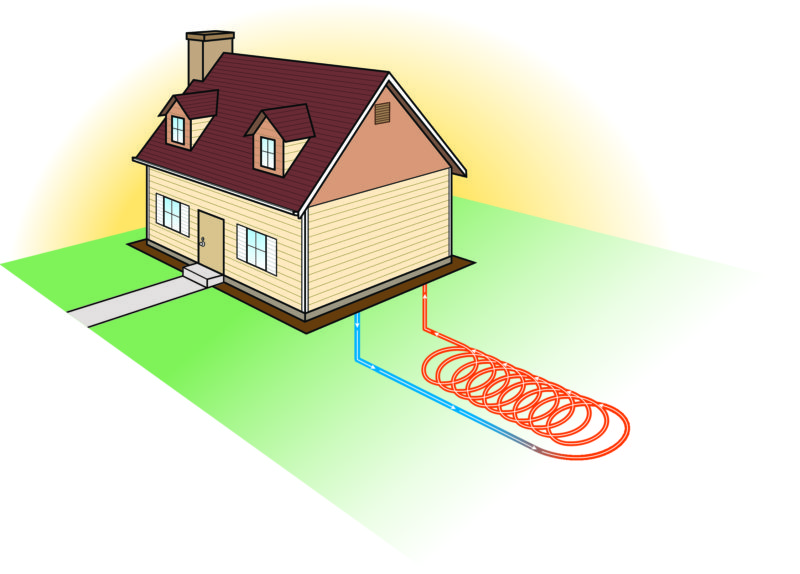
Horizontal closed-loop systems are one of the most common types of geothermal heat pump systems for properties with enough open land. Instead of drilling deep vertical boreholes, contractors install long sections of pipe in shallow trenches across the property. This design allows the system to exchange heat with the ground while keeping drilling requirements relatively limited.
How Horizontal Loop Systems Work
A horizontal geothermal heat pump system uses a sealed network of pipes buried several feet below the ground. A water-based solution circulates through the loop, absorbing heat from the earth during cooler weather and releasing heat into the ground during warmer weather.
The pipes may be installed in straight runs or arranged in a coiled configuration, sometimes called a slinky loop. The exact layout depends on the available space, soil conditions, system size, and the heating and cooling needs of the building.
Because the loop remains sealed, the same fluid circulates continuously through the system. This differs from an open-loop system, which draws water from a well or other source.
Best Applications for Horizontal Installations
Horizontal systems are generally best suited for residential properties, schools, commercial buildings, and other sites with sufficient open land for trenching. They may be a practical option for new construction projects where excavation can be coordinated with other site work.
A horizontal installation may be suitable when:
- The property has a large, unobstructed yard
- Soil conditions support trench excavation
- Deep drilling is difficult or unnecessary
- The ground loop can be installed away from utilities, septic systems, and structures
- The property owner wants a closed-loop geothermal heat pump system
A professional site evaluation is necessary to determine how much land is required and whether the soil can support efficient heat transfer.
Advantages of Horizontal Geothermal Heat Pump Systems
Horizontal systems can offer several benefits when the property has enough available space. Since the pipes are placed in shallow trenches rather than deep boreholes, installation may require less specialized drilling equipment.
Other potential advantages include:
- Lower installation costs than some vertical systems
- Reliable year-round heating and cooling
- A sealed loop that does not depend on groundwater quality
- Flexible pipe configurations for different property layouts
- Long service life for properly installed underground loops
- Reduced exposure to outdoor temperature changes
Like other geothermal heat pumps, horizontal systems use the stable ground temperature to support efficient indoor comfort throughout the year.
Potential Limitations
The main limitation of a horizontal system is the amount of land required. Smaller lots, heavily landscaped properties, and sites with limited open space may not provide enough room for the necessary trenches.
Other considerations include:
- Temporary disruption to lawns and landscaping
- Excavation around underground utilities or site features
- Performance differences based on soil type and moisture levels
- Limited suitability for dense urban properties
- The need for careful loop sizing and trench placement
Horizontal systems are not the right fit for every property. A qualified geothermal contractor can evaluate the land, soil, building load, and installation conditions to determine whether this type of geothermal heat pump is a practical option.
2. Vertical Closed-Loop Geothermal Heat Pump Systems
Vertical closed-loop systems are a practical option for properties with limited surface space. Instead of spreading pipes across a large area, contractors drill deep boreholes and install the ground loops vertically. This configuration is commonly used for smaller residential lots, commercial properties, schools, and other sites where horizontal trenching is not practical.
How Vertical Loop Systems Work
A vertical geothermal heat pump system uses one or more deep boreholes drilled into the ground. Each borehole contains a loop of high-density polyethylene pipe, typically arranged in a U-shape. The pipes are connected to the indoor heat pump and filled with a water-based solution that circulates continuously through the closed system.
During warmer weather, the fluid carries heat from the building into the ground. During cooler weather, it absorbs heat from below the surface and transfers it indoors. The boreholes are then sealed with grout to support heat transfer and protect the surrounding ground and groundwater.
The number and depth of the boreholes depend on the property’s heating and cooling needs, soil and rock conditions, available space, and system design.
When Vertical Systems Are the Better Choice
Vertical closed-loop geothermal heat pump systems are often recommended when a property does not have enough open land for a horizontal installation. They may also be suitable when the site has extensive landscaping, parking areas, existing structures, or other features that make trenching difficult.
A vertical system may be the better option when:
- The lot is small or narrow
- Surface disruption needs to be minimized
- The property is in a developed or densely built area
- A large commercial or institutional building requires greater loop capacity
- The soil near the surface is unsuitable for horizontal trenches
- Existing landscaping or hardscaping must be preserved
Because vertical loops use depth rather than surface area, they can provide geothermal heating and cooling without requiring a large section of open yard.
Benefits of Vertical Installations
Vertical systems offer several advantages for properties where land is limited. Their compact footprint allows installers to place the loop field within a relatively small area while still accessing stable underground temperatures.
Potential benefits include:
- Less surface area required than horizontal systems
- Reduced disruption to lawns and landscaping
- Consistent heat exchange at greater depths
- Suitability for residential, commercial, and institutional properties
- Flexible installation on smaller or developed lots
- Long service life for properly installed underground loops
Vertical boreholes may also experience less seasonal temperature variation than shallow horizontal trenches, which can support consistent system performance.
Installation Considerations
Vertical geothermal systems generally require specialized drilling equipment and a detailed site assessment. Contractors must evaluate the local geology, groundwater conditions, available drilling access, and the heating and cooling load of the building before designing the loop field.
Other important considerations include:
- Higher upfront installation costs than many horizontal systems
- Access for drilling rigs and support equipment
- Local permits and environmental requirements
- The depth and number of boreholes needed
- Proper spacing between boreholes
- Accurate grouting and pipe installation
- Potential challenges involving rock formations or groundwater
Although vertical installations may cost more initially, they can be a practical long-term solution when space is limited. A qualified geothermal contractor can determine whether this type of geothermal heat pump system is appropriate for the property and design the loop field for reliable performance.
3. Pond/Lake Closed-Loop Geothermal Heat Pump Systems
Pond or lake closed-loop systems are one of the less common but potentially cost-effective types of geothermal heat pump systems. Instead of burying the entire ground loop in trenches or installing it inside deep boreholes, this configuration places coiled sections of pipe beneath the surface of a suitable body of water.
The loop remains sealed, so the system does not draw water directly from the pond or lake. A water-based solution continuously circulates through the pipes and transfers heat between the building and the surrounding water.
How Pond or Lake Loop Systems Work
A pond or lake geothermal heat pump system uses a closed network of durable pipes connected to the indoor heat pump. The pipes typically run underground from the building to the water before forming coils that are anchored beneath the pond or lake’s surface.
During warmer weather, the circulating fluid carries heat away from the building and releases it into the water. During cooler weather, the process reverses, allowing the loop to absorb heat from the water and transfer it indoors.
Because the pipes are submerged, the body of water serves as the system’s heat-exchange environment. The fluid stays inside the sealed loop and does not mix with the pond or lake water.
Site Requirements
A pond or lake closed-loop system is only practical when a property has access to a suitable body of water. The pond or lake must have enough surface area, depth, and water volume to support the building’s heating and cooling demands throughout the year.
Important site requirements may include:
- A pond or lake located reasonably close to the building
- Adequate water depth and volume
- Stable water levels throughout the year
- Sufficient space for the required pipe coils
- Suitable access for installation equipment
- Permission to use the body of water
- Compliance with local permitting and environmental requirements
The water must also remain deep enough to protect the loop from exposure, temperature extremes, and possible damage. A geothermal contractor should evaluate the site, calculate the building’s heating and cooling load, and determine whether the pond or lake can support reliable heat exchange.
Benefits and Drawbacks
When site conditions are suitable, a pond or lake system can reduce the amount of excavation and drilling required for geothermal installation. This may make it less costly to install than horizontal or vertical loop fields in some situations.
Potential benefits include:
- Less excavation than many ground-based loop systems
- No need for deep vertical drilling
- Efficient heat exchange with a suitable body of water
- A sealed loop that does not rely on groundwater quality
- Limited disruption to the property’s lawn and landscaping
- Reliable year-round heating and cooling
However, this type of geothermal heat pump is not appropriate for every property. Potential drawbacks include:
- Dependence on access to a suitable pond or lake
- Possible permits or environmental restrictions
- Installation challenges near shorelines
- The need to protect submerged pipes from anchors, debris, or other damage
- Potential performance concerns if water levels change significantly
- Limited suitability for shallow, small, or seasonally dry bodies of water
A professional site assessment is essential before choosing a pond or lake configuration. When designed and installed correctly, it can provide an efficient geothermal solution while minimizing the land disturbance associated with other closed-loop systems.
4. Open-Loop Geothermal Heat Pump Systems
Open-loop systems are one of the main types of geothermal heat pump systems. Unlike closed-loop configurations, which circulate the same fluid through sealed underground pipes, an open-loop geothermal heat pump uses groundwater directly as the heat-exchange medium.
This setup can be effective when a property has access to a clean, dependable water source and local regulations allow the water to be discharged or returned after it passes through the system.
How Open-Loop Systems Operate
An open-loop geothermal heat pump system draws groundwater from a well, pond, or other approved source and moves it through the heat pump’s heat exchanger. The system transfers heat between the water and the building before directing the water to a discharge well, drainage area, surface water source, or another approved location.
During warmer weather, the groundwater absorbs heat removed from the building. During cooler weather, the system extracts heat from the water and transfers it indoors.
Because the system uses water directly rather than circulating fluid through a sealed ground loop, it requires a consistent supply and a properly designed return or discharge method.
Water Supply Requirements
A reliable water source is essential for an open-loop system. The supply must provide enough water to meet the building’s heating and cooling demands without significantly affecting the well, surrounding groundwater, or nearby properties.
Important requirements may include:
- Adequate water flow throughout the year
- Stable groundwater levels
- Suitable water temperature
- Acceptable mineral and sediment levels
- Proper well capacity
- An approved method for returning or discharging the water
- Compliance with local water-use and environmental regulations
A contractor may recommend water testing and a well-flow evaluation before determining whether an open-loop geothermal heat pump is suitable for the property.
Advantages
Open-loop systems can offer several benefits when the site has a dependable, high-quality water source. Since they do not require an extensive buried loop field, installation may involve less excavation than some closed-loop systems.
Potential advantages include:
- Efficient heat exchange with groundwater
- Fewer underground pipes than many closed-loop systems
- Lower installation costs in some locations
- Reduced land requirements
- No need for deep boreholes or large trench fields
- Reliable year-round heating and cooling when water conditions remain stable
The actual performance and cost depend on the well, water quality, local regulations, and system design.
Maintenance and Water Quality Considerations
Water quality is one of the most important factors in an open-loop geothermal heat pump system. Minerals, sediment, iron, hardness, or biological material may build up inside the heat exchanger, pipes, valves, or pumps and reduce system performance.
Common maintenance concerns include:
- Mineral scaling
- Sediment buildup
- Corrosion
- Clogged filters or strainers
- Reduced well flow
- Pump wear
- Changes in water quality over time
- Blocked or poorly performing discharge systems
Regular inspections can help identify buildup, flow restrictions, or well-related concerns before they affect comfort. Depending on the water conditions, the system may require periodic cleaning, filter maintenance, or treatment recommended by a qualified professional.
An open-loop system can be a practical option, but it requires careful planning and ongoing attention to water quality. A geothermal contractor should evaluate the water source, local requirements, and long-term maintenance needs before recommending this type of geothermal heat pump.
Which Type of Geothermal Heat Pump System Is Right for Your Property?
Choosing between the different types of geothermal heat pumps depends on more than the size of the building. The best system also depends on the property’s available space, soil conditions, water access, installation budget, and local requirements.
A professional site evaluation is important because two properties with similar heating and cooling needs may require very different loop configurations. Reviewing the following factors can help narrow down which geothermal heat pump system may be the most practical option.
Available Land
The amount of usable land is one of the first factors to consider. Horizontal closed-loop systems generally require a large open area for trenching, while vertical systems use much less surface space because the pipes are installed in deep boreholes.
A horizontal system may work well for a spacious property with an open yard. A vertical system may be better for a smaller lot, developed site, or property with extensive landscaping, driveways, or other obstacles. Pond or lake systems require access to a suitable nearby body of water.
The loop field must also be placed away from utilities, septic systems, structures, and other site features that may interfere with installation.
Soil and Geological Conditions
Soil type, moisture levels, rock formations, and underground conditions can affect how easily heat transfers between the loop and the surrounding environment. Some soils conduct heat more effectively than others, which may influence the size and design of the loop field.
Rocky ground can make horizontal trenching more difficult, while deep drilling may be more complex in areas with certain geological formations. Contractors may conduct soil testing, review local geological data, or perform a site survey before recommending a system.
Accurate information about the ground conditions helps ensure that the loop is sized correctly for the building’s heating and cooling requirements.
Access to Groundwater
Access to a reliable water source may make an open-loop system possible. However, the well must provide sufficient flow throughout the year, and the water must meet quality requirements.
High mineral content, sediment, iron, or other contaminants may increase maintenance needs or make an open-loop geothermal heat pump less practical. The property must also have an approved method for returning or discharging the water after it passes through the system.
If groundwater is limited, inconsistent, or unsuitable, a closed-loop system may be the better long-term option.
Budget and Installation Costs
Installation costs vary among the different types of geothermal heat pump systems. Horizontal systems may cost less when the property has enough open land and excavation is straightforward. Vertical systems often require specialized drilling equipment, which can increase the initial expense.
Pond or lake systems may reduce excavation costs when a suitable body of water is already available. Open-loop systems may also have lower installation costs in some cases, but well work, water testing, pumps, and ongoing maintenance should be considered.
It is important to compare more than the upfront price. Property owners should also consider expected operating costs, maintenance needs, equipment lifespan, site disruption, and long-term system performance.
Local Regulations and Environmental Considerations
Geothermal installations may require permits, well approvals, environmental reviews, or compliance with local building codes. Requirements may be especially important for open-loop systems, vertical drilling, and pond or lake installations.
Local regulations may address:
- Well construction and groundwater use
- Water discharge or reinjection
- Drilling depth and borehole placement
- Wetlands and shoreline protection
- Underground utility clearances
- Environmental impact
- Required inspections and permits
A qualified geothermal contractor can help evaluate site conditions and confirm which permits or approvals may be required. Taking these factors into account can help ensure that the selected geothermal heat pump system is practical, compliant, and designed for reliable long-term performance.
5 Benefits of Installing a Geothermal Heat Pump
1. Energy Efficiency
One of the main benefits of geothermal heat pumps is their energy-efficient operation. Rather than generating heat through combustion, the system transfers existing heat between the building and the ground, groundwater, or a suitable body of water.
Because underground temperatures remain more consistent than outdoor air temperatures, the heat pump often works under less demanding conditions than a conventional air-source system. This can reduce the electricity needed to maintain a comfortable indoor temperature.
Proper loop sizing, equipment selection, insulation, ductwork, and installation are essential for achieving efficient performance.
2. Lower Operating Costs
The efficiency of a geothermal heat pump system may lead to lower monthly heating and cooling costs, particularly in buildings with high energy demands. While geothermal systems often require a higher upfront investment, reduced energy use may help offset part of that expense over time.
Potential savings depend on factors such as:
- Local electricity prices
- The efficiency of the system being replaced
- The size and condition of the building
- Thermostat settings
- Insulation and air sealing
- Loop design and installation quality
- Maintenance practices
Property owners should compare estimated installation expenses, operating costs, maintenance requirements, and potential incentives before making a decision.
3. Consistent Indoor Comfort
Geothermal heat pumps can provide steady heating and cooling without the large temperature swings sometimes associated with conventional systems. The system delivers conditioned air gradually and consistently, helping maintain even temperatures throughout the building.
Many geothermal systems also support indoor humidity control during the cooling season. This can be especially helpful in Florida, where high humidity may make indoor spaces feel uncomfortable even when the thermostat shows a moderate temperature.
Correct system sizing and well-designed ductwork are important for maintaining balanced airflow and consistent comfort from room to room.
4. Long Equipment Lifespan
Geothermal systems are designed with most major equipment located indoors, where it is protected from direct sun, rain, wind, salt air, and other outdoor conditions. This protected location may help reduce weather-related wear on the heat pump unit.
The underground loop can also remain functional for many years when it is properly designed and installed. However, the indoor heat pump, circulation pumps, controls, and other mechanical components will still require routine maintenance and eventual replacement.
The useful life of a geothermal heat pump system depends on installation quality, system usage, water or soil conditions, and ongoing care.
5. Reduced Environmental Impact
Geothermal heat pumps can reduce the energy required to heat and cool a building. Lower energy consumption may also reduce the associated emissions from electricity generation, depending on the local power supply.
Because geothermal systems transfer heat instead of burning fuel at the property, they do not produce on-site combustion emissions during normal operation. They also eliminate the need for an outdoor condenser unit, which may reduce exterior equipment noise.
Environmental benefits depend on the system type, electricity source, refrigerant management, site conditions, and installation practices. Proper planning is particularly important for open-loop, vertical, and pond or lake systems to help protect groundwater and surrounding ecosystems.
Professional Installation Matters for Geothermal Heat Pump Systems
A geothermal heat pump system depends heavily on accurate planning and installation. Unlike a conventional HVAC replacement, geothermal installation involves the building, underground conditions, loop field, heat pump equipment, and distribution system. An error in any part of the design may reduce efficiency, create comfort problems, or increase operating and repair costs.
Working with an experienced geothermal contractor helps ensure that the selected system matches the property’s heating and cooling demands. Professional installation also supports safe operation, code compliance, and reliable performance over the system’s service life.
Proper Site Evaluation
Before recommending one of the different types of geothermal heat pumps, a contractor should complete a detailed evaluation of the property. This assessment helps determine whether a horizontal, vertical, pond/lake, or open-loop configuration is practical.
A professional site evaluation may consider:
- The building’s heating and cooling load
- Available land and loop-field space
- Soil type and moisture content
- Underground rock formations
- Groundwater availability and quality
- The depth and condition of a nearby pond or lake
- Existing utilities, septic systems, and structures
- Access for excavation or drilling equipment
- Local permit and environmental requirements
The contractor should also inspect the building’s insulation, air sealing, ductwork, and electrical system. These factors can affect the size of the geothermal heat pump and its ability to maintain consistent indoor comfort.
Correct Loop Design
The underground loop is one of the most important parts of a geothermal heat pump system. It must be sized and configured to transfer enough heat for the building without being unnecessarily large or costly.
Loop design depends on the building load, local climate, soil or water conditions, pipe configuration, and the type of geothermal system selected. A loop that is too small may struggle to exchange enough heat during periods of high demand. An oversized or poorly arranged loop may add unnecessary installation costs without providing meaningful benefits.
Professional design helps determine:
- The appropriate loop configuration
- Required pipe length
- Trench or borehole depth
- Spacing between pipes or boreholes
- Fluid type and flow rate
- Pump requirements
- Pipe connections and pressure testing
- Proper grouting for vertical systems
The system must also be matched with correctly sized indoor equipment and an effective air-distribution system. This allows the loop, heat pump, thermostat, blower, and ductwork to operate together as one complete system.
Long-Term System Performance
Proper installation affects how efficiently and reliably a geothermal heat pump operates over time. Correct sizing and commissioning help the system maintain comfortable temperatures without excessive cycling, unnecessary energy use, or added strain on mechanical components.
After installation, the contractor should test fluid flow, electrical operation, thermostat controls, airflow, temperature changes, and overall system performance. The property owner should also receive clear instructions about filter changes, recommended maintenance, system controls, and warning signs that may require service.
Professional installation can support:
- Consistent heating and cooling
- Efficient system operation
- Balanced indoor airflow
- Reduced mechanical strain
- Easier maintenance and troubleshooting
- Longer equipment and loop life
- Compliance with applicable codes and permits
Even high-quality geothermal equipment may underperform when it is not properly designed or installed. Choosing an experienced contractor helps protect the investment and supports dependable heating and cooling throughout the year.
FAQs About Geothermal Heat Pumps
Which type of geothermal heat pump system is the most efficient?
There is no single geothermal heat pump system that is the most efficient for every property because performance depends on site conditions, system sizing, loop design, soil or water temperatures, equipment quality, and installation accuracy. Horizontal, vertical, pond/lake, and open-loop systems can all perform efficiently when they are matched to the property’s heating and cooling load. For example, a pond/lake system may be highly effective when a suitable body of water is available, while a vertical system may perform better on a smaller lot with limited surface space. The most efficient option is usually the one designed around the property’s specific conditions rather than the system type alone.
What is the difference between open-loop and closed-loop geothermal systems?
The main difference is how each system exchanges heat with the ground or water. A closed-loop geothermal heat pump system circulates the same water-based solution through a sealed network of underground or submerged pipes, allowing the fluid to transfer heat without leaving the loop. An open-loop system draws groundwater or water from an approved source, passes it through the heat exchanger, and then returns or discharges it according to local regulations. Closed-loop systems are less dependent on water quality and availability, while open-loop systems require a reliable water supply and may need more maintenance because of mineral buildup, sediment, or corrosion.
Are geothermal heat pumps suitable for Florida homes?
Geothermal heat pumps can be suitable for Florida homes because they provide efficient cooling, heating, and humidity control by using the relatively stable temperature below the ground. This can be especially helpful during Florida’s long, hot, and humid cooling season. However, suitability depends on available land, soil conditions, groundwater quality, property layout, flood exposure, installation access, and local permitting requirements. A professional site evaluation is necessary to determine whether a horizontal, vertical, pond/lake, or open-loop geothermal heat pump system is practical for a specific Florida property.
How long does a geothermal heat pump system last?
A geothermal heat pump system includes indoor mechanical equipment and an underground or submerged loop, and these components have different expected service lives. The indoor heat pump contains motors, controls, compressors, pumps, and other moving parts that will eventually require repair or replacement, while a properly installed ground loop may remain functional for several decades because it is protected from weather and direct exposure. Actual system life depends on installation quality, operating conditions, maintenance, water or soil conditions, and how heavily the system is used. Routine professional inspections can help identify wear early and support reliable long-term performance.
Are geothermal heat pumps expensive to install?
Geothermal heat pumps usually cost more to install than conventional HVAC systems because the project may require excavation, drilling, underground pipe installation, specialized equipment, permits, and possible updates to ductwork or electrical components. Horizontal systems may be less expensive when the property has enough open land, while vertical systems often cost more because they require deep drilling. Pond/lake and open-loop systems may reduce some installation expenses when suitable water resources are already available. Although the upfront cost can be significant, lower operating expenses, potential incentives, and the long service life of the ground loop may improve the system’s overall long-term value.
Do geothermal heat pumps require a lot of maintenance?
Geothermal heat pumps generally require routine maintenance similar to other heating and cooling systems, but the underground loop usually needs little attention once it is properly installed. Homeowners should replace air filters, keep vents unobstructed, monitor thermostat performance, and schedule regular professional inspections. A technician may check electrical connections, refrigerant components, loop-fluid pressure, circulation pumps, condensate drainage, airflow, and heat exchanger performance. Open-loop systems may require additional maintenance because minerals, sediment, or changes in water quality can affect pumps and heat exchangers. Consistent maintenance helps protect efficiency, comfort, and system reliability.
Dig into Savings. Stay Grounded in Comfort!
Choosing among the different types of geothermal heat pumps starts with understanding your property’s unique needs. Whether a horizontal, vertical, pond/lake, or open-loop system is the right fit depends on factors such as available land, site conditions, water access, and your heating and cooling requirements. A properly designed and professionally installed geothermal heat pump system can provide reliable indoor comfort, improved energy efficiency, and dependable performance for years to come.
If you’re considering geothermal heating and cooling, we’re here to help. At Executive Cooling & Heating, we’ll evaluate your property, explain your options, and recommend the geothermal heat pump system that best suits your home or business. We also provide Air Conditioning Repair Service in Punta Gorda, Indoor Air Quality Services in Punta Gorda, Air Conditioner Maintenance Plans in Punta Gorda, and Commercial HVAC Services in Punta Gorda to keep your comfort system operating at its best. Plus, with GreenSky Financing available for qualified customers, investing in your comfort may be more manageable. Call us today at (941) 637-9800 or contact us to schedule a consultation—we look forward to helping you find the right HVAC solution for your property.